
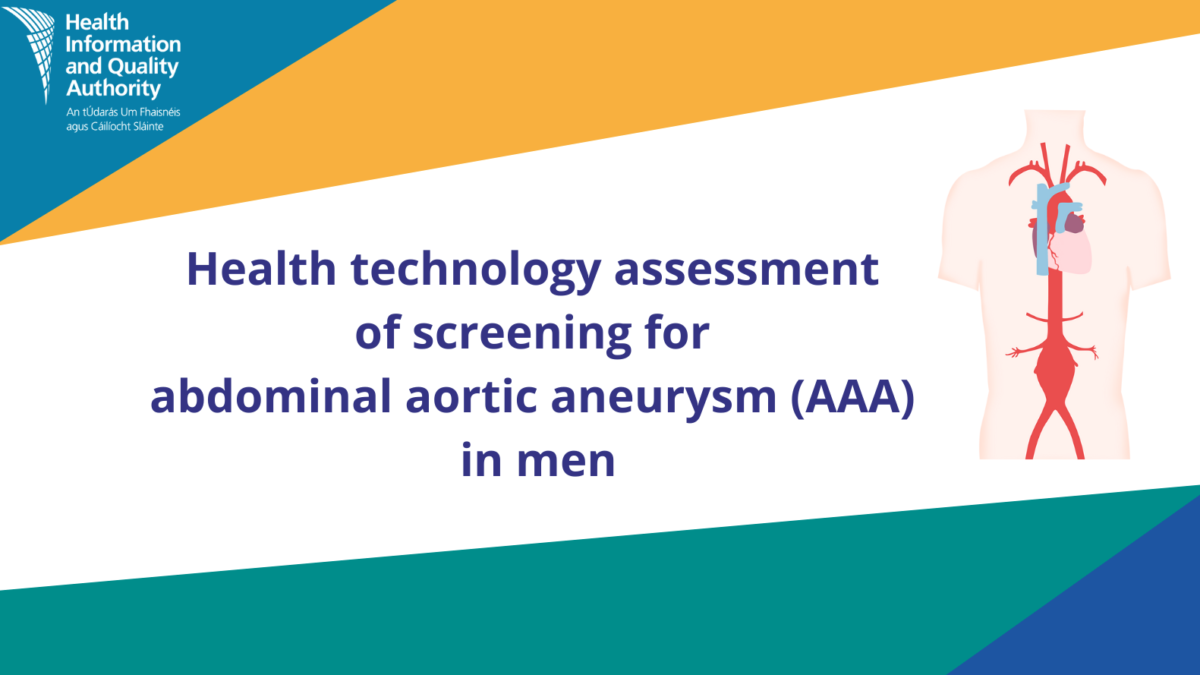
We have begun a study looking at the value of screening for abdominal aortic aneurysm in men. This health technology assessment will serve as advice to the National Screening Advisory Committee to inform its recommendation to the Minister for Health on whether to introduce a screening programme for men in Ireland.
Abdominal aortic aneurysm (AAA) involves bulging in the aorta, the main blood vessel that runs from the heart down through the chest and stomach. Typically AAAs have no symptoms, but can grow and rupture if left untreated, which can be fatal. Approximately 8 out of every 10 people with a ruptured AAA die before reaching hospital or do not survive emergency surgery. As AAA often has no symptoms, early detection may reduce the risk of mortality.
AAA affects approximately 1% to 3% of people aged 65 years and older. The prevalence has been estimated to be three to six times higher in men over 65 years of age than in women of a similar age, which is why assessment of screening for men has been prioritised.
Speaking about the study, Dr Máirín Ryan, HIQA’s Deputy CEO and Director of Health Technology Assessment said: “Screening programmes can offer considerable benefits. They can identify conditions before symptoms begin, enabling earlier access to treatment. A decision to screen for a condition should always be considered carefully and be based on the best available evidence. This assessment will review the evidence for implementing a screening programme for AAA in men.”
Our review, due to be completed next year, will examine the evidence on clinical effectiveness, safety, cost effectiveness and budget impact of AAA screening for men, along with the ethical, social and organisational implications associated with the introduction of a national screening programme for AAA. The Protocol for this health technology assessment is available here.